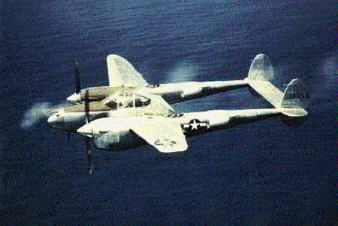
LIGHTNING STRIKES

DILLINGER
Admiral Yamamoto was the Chief of Naval of Operations for the Imperial Japanese Navy (IJN), and was the chief mastermind behind the attack on Pearl Harbor. ADM Yamamoto was a brilliant
strategist and a well regarded figure within the IJN. It was hoped his death would have profound affect on Japanese strategy and morale.
Radio intercepts of Japanese communications on 14 April 1943 revealed that ADM Yamamoto was scheduled to inspect forward bases over the following 4 days. A plan was proposed to intercept the Admiral
and strike a blow to the Japanese, by assassinating one of its leaders.
The mission was of a very sensitive nature. An overt attack on the Admiral's transport would reveal to the Japanese the America was capable of deciphering their codes. Secondly, the planners were
sensitive of how people in the US may perceive such an attack on an individual, even if he was the enemy. The attack itself was designed to look like a chance encounter between a long range, low
altitude patrol and the Admiral's transport. The task fell to the 339th FS and was to be lead by MAJ John Mitchell (8 kills). The 339th flew 38s which was the only plane in the inventory capable
of flying the distance to make the intercept.
On 18 April Yamamoto was scheduled to depart from the Kahili area. MAJ Mitchell and his strike group departed Guadalcanal shortly before 8 am to begin the 2+ hour flight. 18 aircraft took off,
but 2 had to abort. The remaining aircraft were grouped into a 4 plane attack section and a 12 ship cover section. The strike group avoided islands along the way and flew just over the deck to
avoid Japanese radar. The cockpits of the 38 were not well ventilated and the hot pacific sun made the trip a bit uncomfortable. The aircraft were also equipped with fuel tanks that didn't have
baffles. The fuel was free to slosh about and made flying a chore.
At 0930 a flight composed of 2 "Betty" bombers and six Zero escorts was sighted. The flight of 38s broke up into their designated rolls and the attack was on. The attack section was flown by CAPTs
Lanphier, Barber, Holmes, and LT Hine. Mitchell lead the cover section and flew to higher altitude. Barber (flying white 147) got strikes in on both bombers and flamed a zero. Lanphier claimed
another zero and also claimed to get shots on Yamamoto's Bomber as it crashed into the jungle covered island.
The Japanese scrambled zeros to protect Yamamoto and intercept the 38s. The strike package was able to disengage and return to Guadalcanal with only one loss: LT Hine.
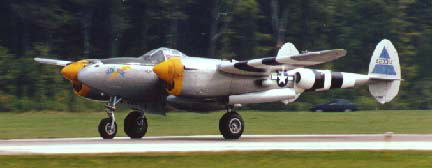
Ace in a Day
Several American Aces achieved that status in one day. Some become aces in one sortie. Murray Shubin (339th FS) is the only P-38 ace to achieve that distinction.
Shubin and his 4 ship flight were 50 miles West of 'Canal getting vectored into the enemy when they spotted a formation of 'Vals' and zeros. Shubin's flight was at angels 29 and the Japanese were
about 6k feet below them. With the sun at his back he bounced the fighter cover. The initial attack shot down 4 zeroes and scattered the rest. As the attack evolved one 38 was forced to retire
with a damaged engine. Shortly thereafter, the remaining 2 38s were forced to retire. Shubin found himself alone with 6 of the remaining zero escorts.
The Zeroes displayed poor fighting tactics and attacked in formation rather than splitting up into smaller groups. This gave Shubin confidence to stay in spite of the odds. Using dive and zoom
tactics Shubin picked off the zeroes one by one, until 45 minutes later he had flamed 5 and damaged the sixth. All the kills were confirmed by a group of observers on nearby islands.